Authored by: Dr.Sofia Hawelia (orthodontist)
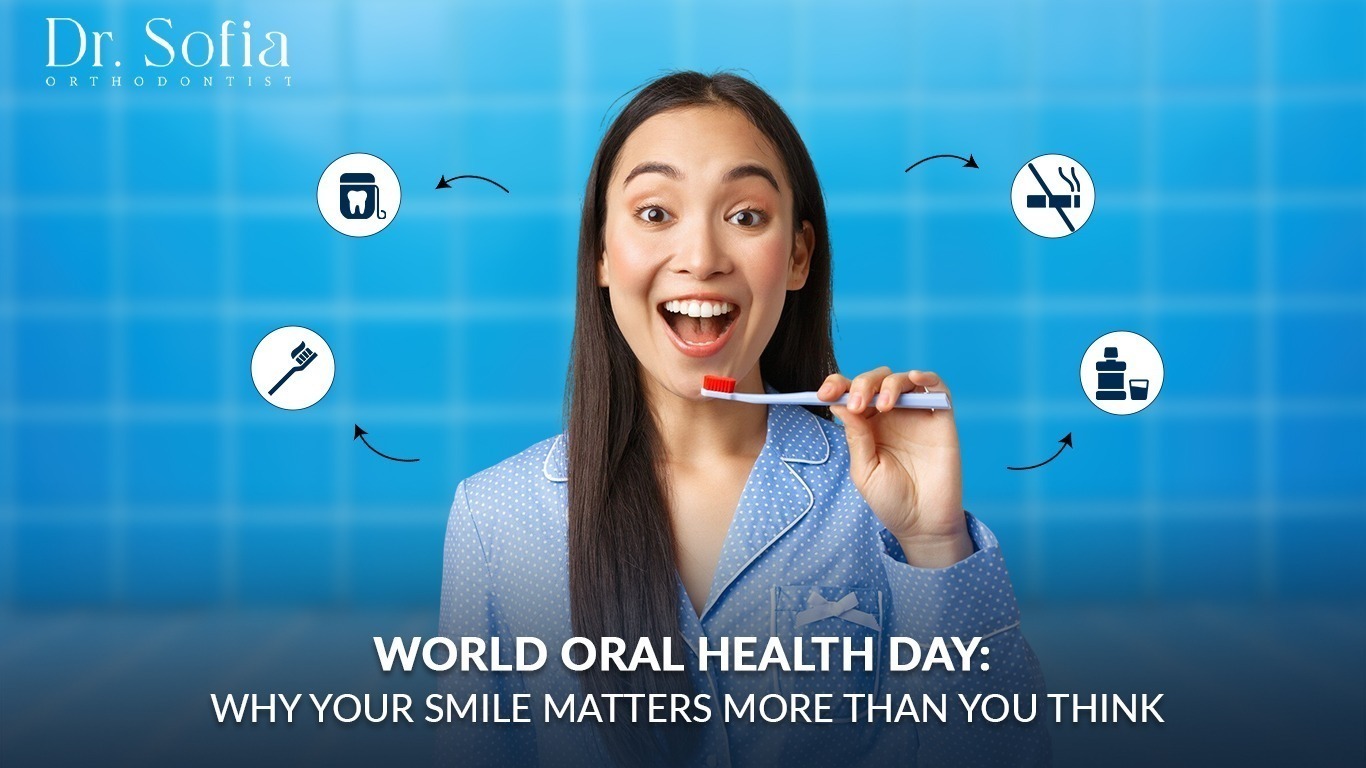
Every year on March 20, the world comes together to celebrate World Oral Health Day (WOHD) — a global awareness campaign led by the FDI World Dental Federation. The date is no coincidence: it represents the ideal number of teeth in healthy adults (32) and children (20), written as 20.3.
The mission is simple but powerful — to empower people of all ages to take charge of their oral health and break the cycle of preventable disease. This year’s message is clear: a healthy mouth is a gateway to a healthy body.
Your mouth does far more than help you eat and speak — it’s a window into your overall health. Research consistently shows that oral diseases are closely linked to serious systemic conditions including heart disease, diabetes, and respiratory illness.
3.5B people worldwide affected by oral diseases
2× higher risk of heart disease with gum disease
90% of oral conditions are largely preventable
Poor oral health doesn’t just affect your teeth — it can impact your confidence, nutrition, sleep quality, and even career prospects. Prioritizing your mouth is
prioritizing your life.
Many people don’t seek dental care until pain strikes — but by then, damage may already be significant. Here are the most common oral health issues to watch for:
The good news? Most oral diseases are entirely preventable with consistent daily habits. Here’s what dentists recommend:
Visiting your dentist every six months isn’t just about cleaning — it’s about catching problems before they become costly or painful. Early detection of cavities, gum disease, or even oral cancer can save your teeth, your health, and your wallet.
Professional cleanings remove hardened tartar that no toothbrush can tackle, and your dentist can spot warning signs invisible to the untrained eye. Many people skip dental visits due to anxiety or cost — but preventive care is always far less expensive than restorative treatment.
Oral health needs evolve as we age. Here’s a quick guide tailored to every stage of life:
Begin brushing at the first tooth. Limit sugary drinks. First dental visit by age one.
Brace-wearers need extra care. Avoid energy drinks. Build strong brushing habits now.
Watch for gum disease. Manage stress-related grinding. Stay consistent with checkups.
Combat dry mouth from medications. Care for dentures. Screen regularly for oral cancer.
Hormonal changes increase gum disease risk. Dental care during pregnancy is safe and important.
Diabetics and heart patients need closer monitoring — oral and systemic health are deeply connected.
World Oral Health Day is a reminder that a healthy smile is a lifelong investment.
Start small — brush better tonight, book that overdue checkup, and pass these tips along to someone you care about.
Book Your Dental Checkup Today → Contact Us
Because the best time to care for your smile was yesterday.
The second-best time is now.