
Authored by: Dr.Sofia Hawelia (orthodontist)
Crooked teeth, crowded smiles, misaligned bites these are not just cosmetic concerns. Left unaddressed, orthodontic problems can affect how you chew, how you speak, how easy it is to keep your teeth clean, and how confident you feel every time you smile.
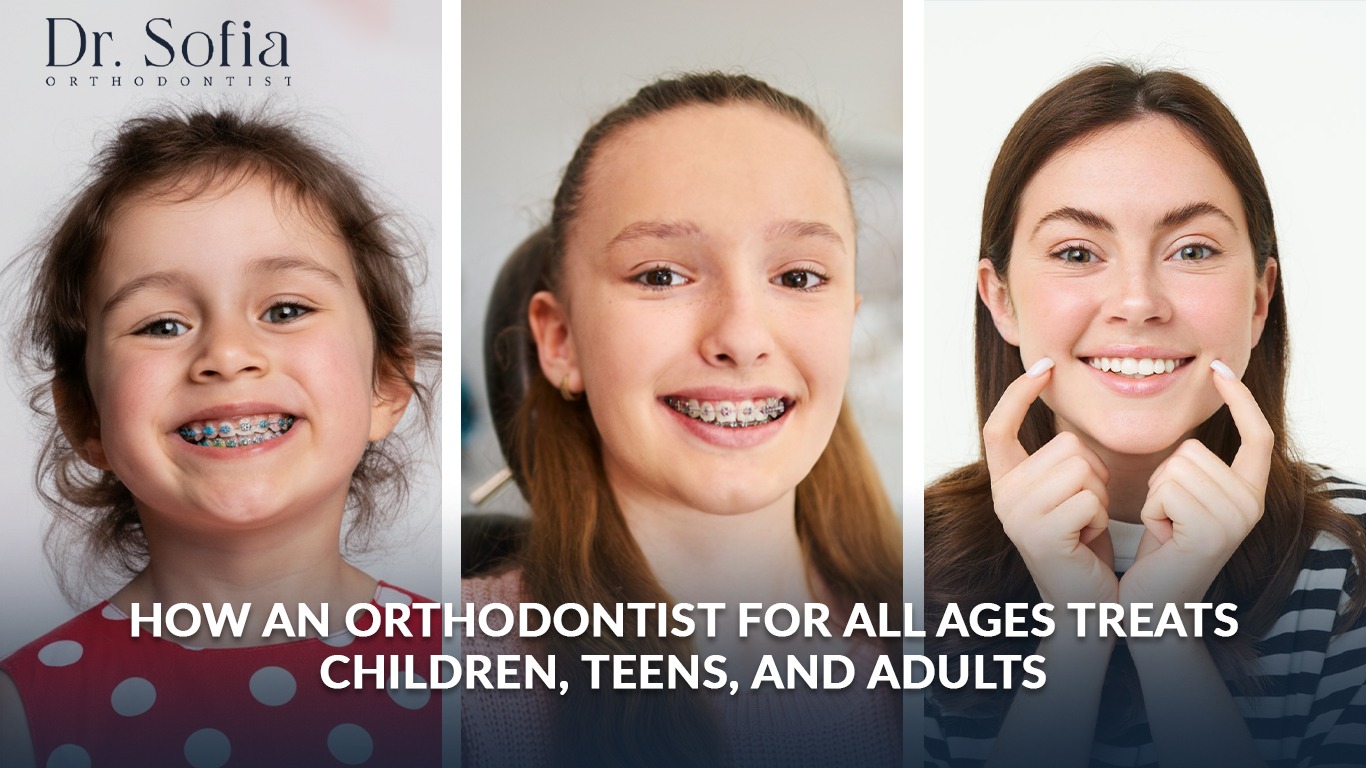
What many people do not realise is that orthodontic treatment is not just for teenagers with braces. It is a specialised field of dentistry that serves patients at every stage of life from young children whose jaws are still developing, to adults who never got the chance to straighten their teeth, or whose teeth have shifted over the years.
Finding an orthodontist for all ages means your whole family can receive expert orthodontic care under one roof each member treated with an approach that is appropriate for their age, their specific dental condition, and their lifestyle.
An orthodontist is a dental specialist who has completed additional years of postgraduate training beyond a standard dental degree, specifically in the diagnosis, prevention, and treatment of misaligned teeth and jaws (a condition called malocclusion).
While a general dentist focuses on overall oral health fillings, cleanings, extractions an orthodontist focuses exclusively on the alignment of teeth and the relationship between the upper and lower jaws.
When Should a Child First See an Orthodontist?
The American Association of Orthodontists recommends that children have their first orthodontic evaluation by the age of 7.
At this stage, children have a mix of baby and permanent teeth, and early examination allows an orthodontist to identify developing problems before they become more complex.
Early assessment does not always mean early treatment. In many cases, monitoring is all that is needed for several years. However, identifying issues early allows orthodontists to intervene at the most effective time.
Conditions Treated in Children
Early orthodontic treatment in children often focuses on:
Common Treatments for Children
The goal at this stage is not necessarily a perfect final result, but creating the right conditions for healthier treatment later.

Why Teen Years Are Ideal for Orthodontic Treatment
The teenage years are the most common time for orthodontic treatment because:
This combination makes treatment faster and more effective compared to adulthood.
Conditions Treated in Teens
Orthodontic treatment during adolescence typically addresses:
Treatment Options for Teenagers
Teenagers have several treatment options:
The best option depends on the complexity of the case and the patient’s lifestyle.
Is It Too Late for Adults to Get Orthodontic Treatment?
No. Teeth can move at any age.
The biological process that allows teeth to shift in response to orthodontic force works throughout life. While treatment may take slightly longer in adults, the results can be just as effective.
Adult orthodontics is one of the fastest-growing areas in dentistry.
Common Reasons Adults Seek Treatment
Adults often choose orthodontic care for reasons such as:
Treatment Options for Adults
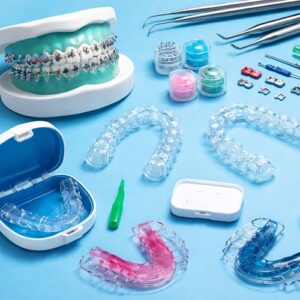
Modern orthodontics offers several discreet options:
Treatment for adults typically lasts 18 months to 3 years, depending on complexity.
At Brace Up Dentistry, we are proud to be a trusted orthodontist for all ages offering comprehensive orthodontic care for children, teenagers, and adults.
Every patient receives a treatment plan tailored to their age, dental condition, lifestyle, and goals.
What You Can Expect
Whether you are bringing your child for their first orthodontic check-up, exploring options for your teenager, or considering treatment for yourself, Brace Up Dentistry provides expert orthodontic care at every stage of life.
Children should ideally see an orthodontist around age 7. At this stage, orthodontists can identify potential alignment issues early and determine whether monitoring or treatment is needed.
Yes. Adults can successfully undergo orthodontic treatment, and modern options like clear aligners make treatment discreet and convenient.
Braces use brackets and wires to gradually move teeth, while clear aligners use removable trays that are changed every few weeks. The right choice depends on the complexity of the case and patient preference.
Treatment length varies depending on the case:
After treatment, retainers are used to keep teeth in their new position. Retainers may be removable or fixed and must be worn as recommended to maintain long-term results.