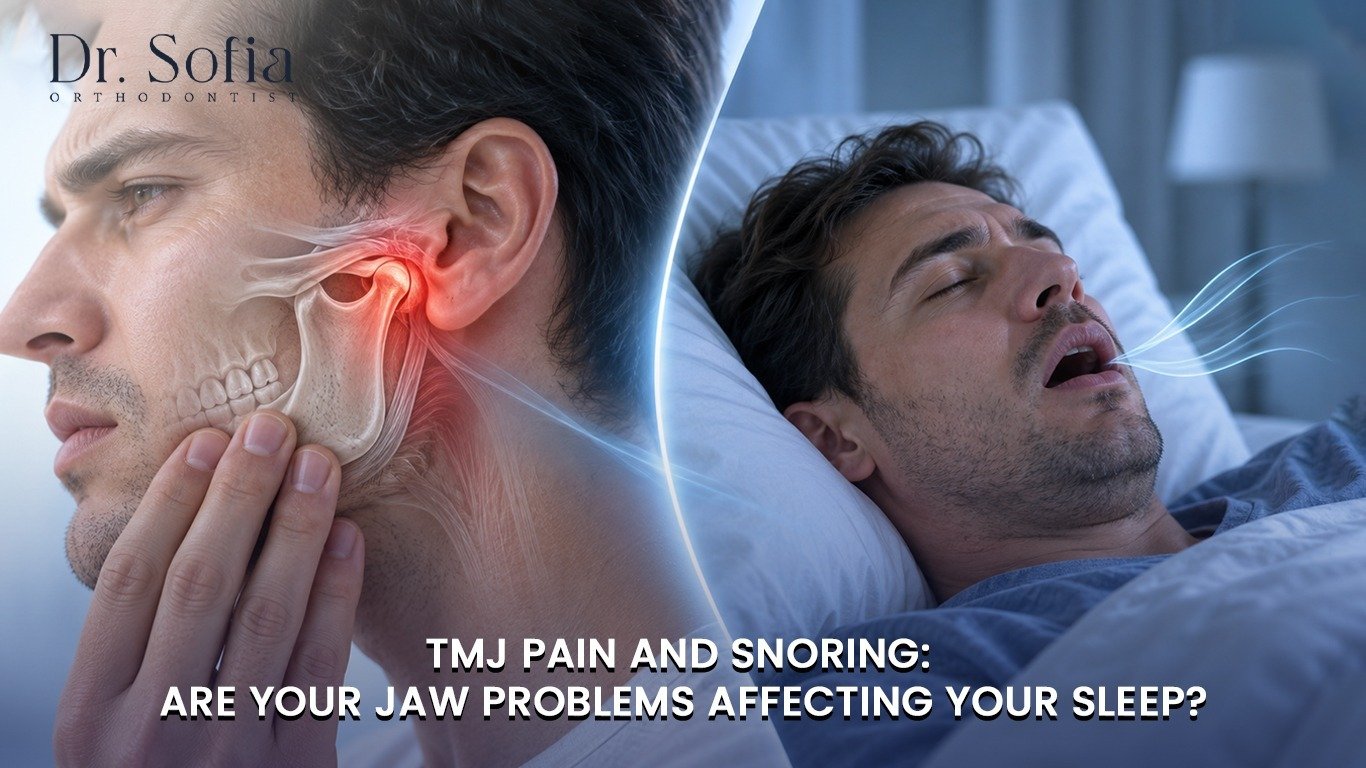
Authored by: Dr.Sofia Hawelia (orthodontist)
You wake up with a sore jaw. Your partner complains about your snoring. You feel exhausted despite eight hours in bed. These signs might seem unrelated, but they could all be pointing to the same culprit—your temporomandibular joint (TMJ).
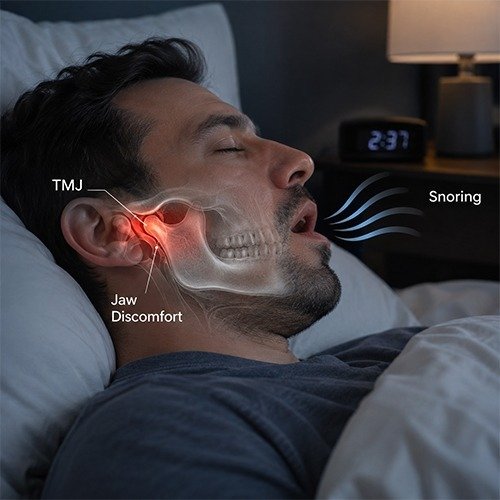
Most people don’t realize that jaw problems and sleep disruption are connected. The TMJ sits right in front of your ear where your lower jaw connects to your skull. When something goes wrong here, it doesn’t just cause pain—it can mess with your sleep quality and breathing patterns in ways you might not immediately connect to your teeth.
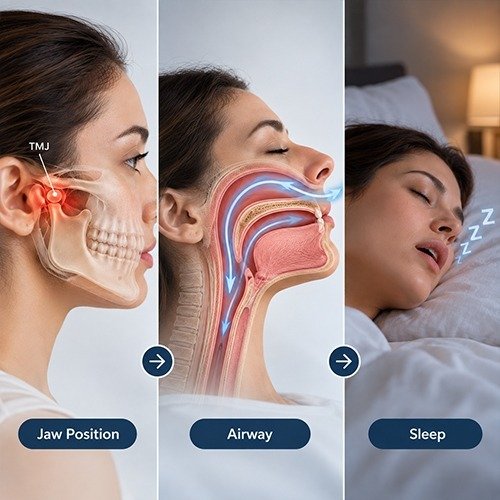
Your jaw isn’t just for chewing. It plays a role in keeping your airway open while you sleep. When you have TMJ problems, the joint can shift out of alignment. This might force your jaw backward, narrowing the space for air to pass through. Result? Snoring, interrupted breathing, or both.
The connection works both ways, too. Sleep disorders like sleep apnea can actually make your TMJ worse. When you stop breathing during sleep, your body jolts awake. This sudden jerk creates tension in your jaw muscles. Over time, this repeating stress damages the joint.
These are the signs you shouldn’t ignore:
If you recognize several of these, it’s time to talk to a dental professional.
Here’s the good news: treating one often helps the other. When you address TMJ pain and snoring treatment, you’re usually tackling both problems at the source.
A dentist can create a custom mouth guard—called a splint or occlusal splint—that repositions your jaw while you sleep. This prevents grinding, reduces joint stress, and opens your airway. Some guards are designed specifically to address TMJ pain and snoring treatment by gently moving the lower jaw forward. This keeps your airway unobstructed, cutting down snoring and improving oxygen flow.
Physical therapy exercises also work. A dentist or physical therapist can teach you jaw exercises that strengthen the muscles supporting the joint. These might seem simple—jaw stretches, gentle movements—but they reduce pain and improve function.
Before jumping to complex treatments, try these:
If TMJ pain and snoring treatment through basic methods isn’t working, your dentist might recommend:
At our clinic, we don’t treat your snoring in isolation from your jaw pain. We look at the whole picture.
When you come in with these concerns, we start with a detailed assessment. This includes listening to your symptoms, examining your jaw alignment, checking your bite, and asking about your sleep patterns. For some patients, we recommend a sleep study to rule out underlying sleep apnea.
From there, we create a treatment plan tailored to you. If you need a dental guard for TMJ pain and snoring treatment, we craft it precisely to your mouth and jaw position. We don’t use one-size-fits-all solutions. Your guard is adjusted during follow-up visits to make sure it’s working and comfortable.
We also educate our patients. Understanding why your jaw hurts and how it connects to your sleep helps you make smarter choices about posture, stress, and daily habits. Many patients are surprised how much their symptoms improve once they understand what’s happening.
Yes. When your jaw is misaligned, it can narrow your airway, leading to snoring and breathing interruptions during sleep.
Start with a dentist who has experience with TMJ and sleep-related issues. They can determine if the problem is jaw-related and refer you to a sleep specialist if needed.
This varies. Some people feel relief within a few weeks of using a dental guard; others need several months of consistent treatment and lifestyle changes.
No. It's a treatment tool. Depending on your condition, you might use it long-term or just until your symptoms resolve and you've built better habits.
Many people improve with exercises, posture changes, stress management, and avoiding hard foods. But if these don't work, a dental guard often becomes necessary.