Authored by: Dr.Sofia Hawelia (orthodontist)
Most people think of weight as a heart or sugar problem. Few connect it to the gums. Yet a dentist sees the pattern often: a patient comes in for bleeding gums, and when the conversation turns to health, weight and diet come up too. The two aren’t a coincidence.
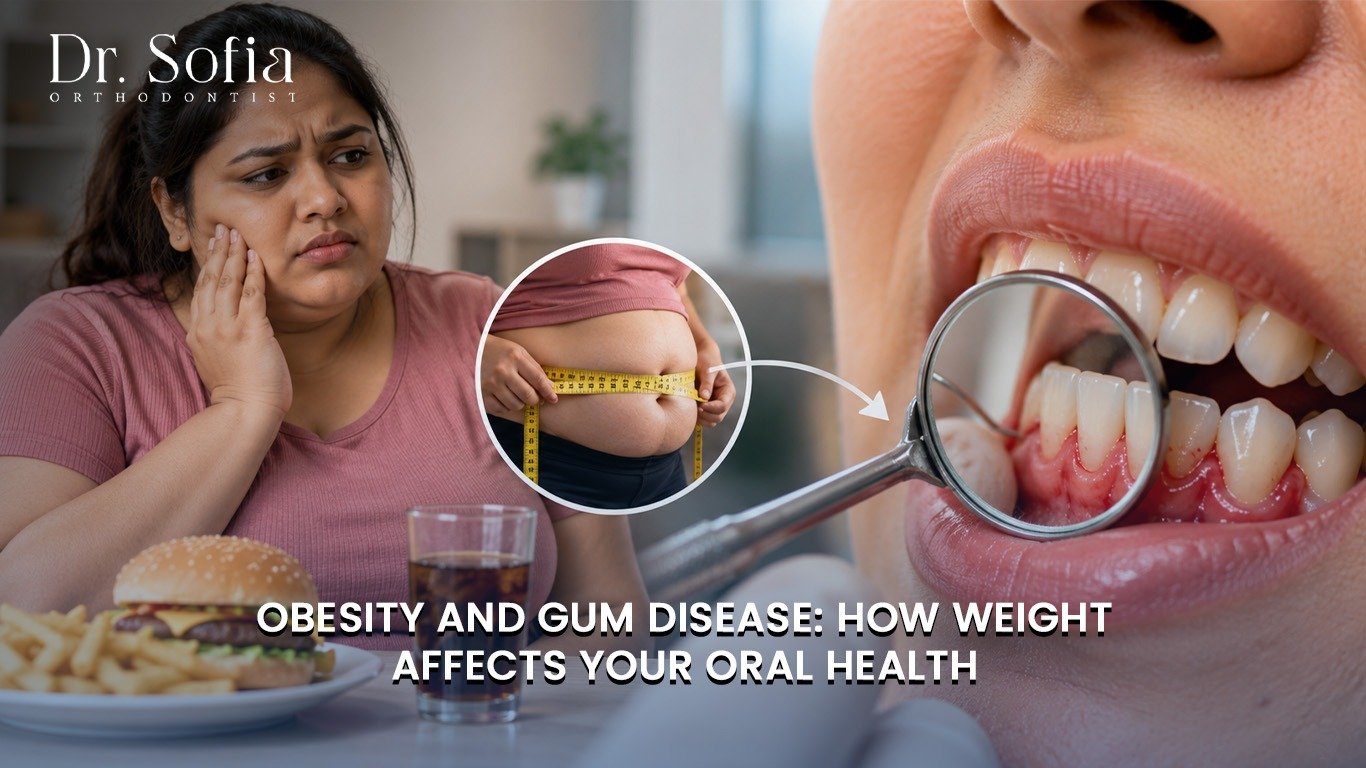
Research keeps finding that people with excess body weight are more likely to have gum problems. This post explains how obesity and gum disease are linked, what to watch for and what you can do about it, starting today.
Gum disease starts with plaque, a sticky film of bacteria that collects along the gumline. If it isn’t cleaned away, the gums become red and sore. That early stage is called gingivitis. Left alone, it can turn into periodontitis, where infection reaches the bone that holds your teeth in place.
Studies show that people with obesity have a higher risk of periodontitis, and the gum problems tend to be harder to control. Weight doesn’t directly rot your gums. The connection runs through two main routes: inflammation inside the body and the way food and eating habits feed plaque. The link between obesity and gum disease works in both directions, since gum infection can also make blood sugar harder to manage.
Body fat isn’t just stored energy. Fat tissue is active. It releases chemical messengers that keep the body in a low, constant state of inflammation. In a person with a lot of extra fat, that signalling never really switches off.
Your gums react to this. Tissue that is already inflamed from plaque becomes more reactive, swells more and heals more slowly. The body’s defence against gum bacteria can also weaken, so infections take hold faster and settle in deeper.
A few ways this shows up:
None of this means every person carrying extra weight will lose teeth. It means the gums need more attention earlier. A patient who has gained weight over the last few years, for example, may not notice that their gums have started bleeding until the problem is well along, simply because they’re used to feeling a bit off.
Plaque bacteria live on sugar. Every time you sip sweet chai, snack on biscuits or finish a meal with mithai, those bacteria get a fresh supply and produce acid that irritates the gums and wears down enamel.
The pattern matters as much as the quantity. Constant grazing through the day gives bacteria a steady meal, while three proper meals give your mouth long breaks to recover. Foods and drinks that tend to cause trouble:
Late-night snacking deserves a special mention. Saliva flow drops while you sleep, so sugar left on the teeth after a midnight snack sits there for hours. Brushing before bed matters more than almost any other brushing of the day.
Foods that help your gums include crunchy vegetables and fruits, nuts, curd and plenty of water. They keep saliva flowing and give your gums something real to work on.
Gum disease is sneaky. It rarely hurts in the early stages, which is why many people miss it. Look out for:
Bleeding gums are not normal, and they’re not caused by brushing too hard in most cases. They’re a signal. If you notice any of these, book a dental visit instead of waiting for pain.
The good news is that gum disease responds well to simple routines. If you’re wondering how to prevent gum disease, these habits do most of the work:
If weight is a concern for you, small steps count. A short walk after dinner, swapping one sugary drink a day for water and eating at fixed times all help your body and your gums.
Brushing can’t remove hardened plaque, called tartar. Once it forms, only a dentist can take it off.
Advanced cases may need more extensive treatment, which is another reason to act early. Treated in time, gums often return to a healthy pink and stop bleeding. Many people notice the difference within a couple of weeks, with less bleeding at the sink and fresher breath. Once the gums settle, regular cleanings keep tartar from building up again.
Your mouth isn’t separate from the rest of you. Gum infection puts a steady load of bacteria and inflammation into your body, and that can make it harder to manage conditions like diabetes and heart problems. Healthy gums also let you chew properly, eat a wider range of foods and keep your teeth for life.
So the connection between obesity and gum disease is a reason to pay attention to both, not to feel guilty about either. Better gum health makes it easier to eat well, and better eating habits help your gums. Each one supports the other. Start with one small change this week, whether that’s flossing at night or cutting one sweet drink, and book the check-up you’ve been putting off.
Dr Sofia Hawelia is a dentist who looks at the whole picture, not only the tooth in front of her. She checks your gums carefully, explains what she finds in plain words and talks through your diet and daily routine without judgement. Patients dealing with weight concerns often feel embarrassed at the dentist’s office. She doesn’t make anyone feel that way. Her approach to obesity and gum disease are practical plans you can actually follow, from professional cleaning in the clinic to simple habits at home. She also helps you spot what’s feeding the problem, whether that’s night-time snacking, sweet drinks or skipped flossing, and fix one thing at a time instead of changing everything overnight.
If your gums bleed, feel swollen or have been bothering you for a while, don’t wait. Book a check-up with Dr Sofia Hawelia and find out where your gums stand.
It raises the risk, mainly through body-wide inflammation and diet.
Red, swollen or bleeding gums and persistent bad breath.
Early-stage gingivitis can be reversed with good care and professional cleaning.
It can help reduce inflammation and lower the risk.
Every 6 months, or more often if you have gum problems.