Authored by: Dr.Sofia Hawelia (orthodontist)
Getting braces is a big decision. The first thought for many people is not just how they’ll look, but also how long the treatment will take. Between ceramic braces and traditional metal braces, patients often wonder which option delivers results faster.
The answer is not as straightforward as most people expect.
While both types of braces are highly effective at correcting alignment and bite issues, the actual treatment duration depends on several factors beyond just the material of the brackets. Understanding the real difference can help you make a smarter, more confident choice for your smile journey.
Before comparing timelines, it’s important to understand what separates these two orthodontic options.
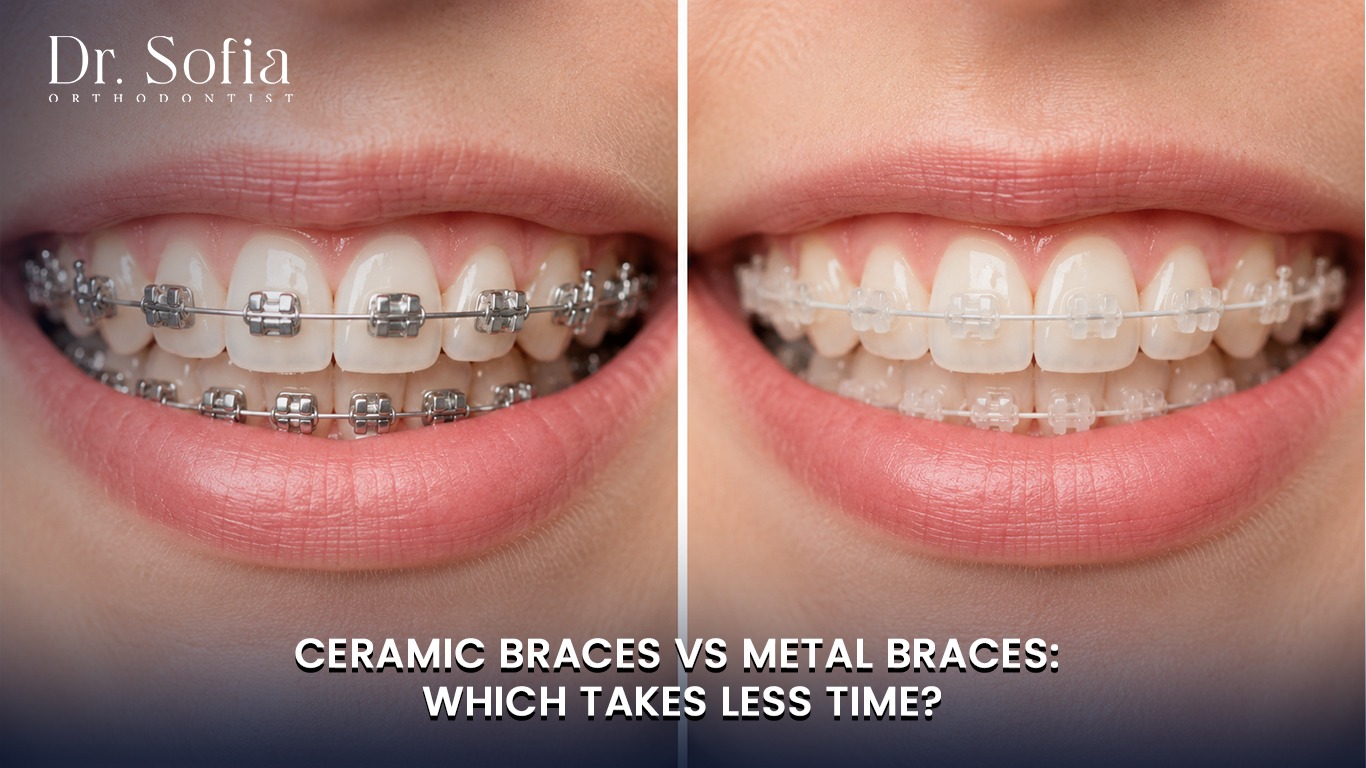
Metal braces are the traditional orthodontic solution that has been used for decades. They are made from durable stainless steel and are known for their strength and reliability.
Metal braces remain one of the most trusted orthodontic systems because they can handle even difficult corrections effectively.
Ceramic braces function similarly to metal braces but use tooth-coloured or clear brackets to blend with natural teeth.
For people who are concerned about appearance during treatment, ceramic braces are often the preferred choice.
This is where most misconceptions begin.
The truth is that braces treatment time depends far more on the patient’s dental condition and treatment compliance than on whether the braces are ceramic or metal.
Several factors influence how quickly teeth move into position.
A simple spacing issue may take significantly less time than severe crowding or bite correction.
Younger patients often experience faster tooth movement because their bones are still developing.
Healthy gums and strong bone support allow teeth to move more efficiently.
Missing orthodontic visits can slow progress and extend overall treatment duration.
Wearing elastics properly, avoiding damaging foods, and maintaining oral hygiene all play a major role.
Deep bites, overbites, crossbites, and jaw alignment problems usually require longer treatment.
Because these factors carry more weight, the difference between ceramic and metal braces is often minimal.
For most patients, the difference in braces treatment time between ceramic and metal braces is surprisingly small.
There is usually little to no noticeable difference in treatment duration.
In some cases, ceramic braces may take slightly longer, but the difference is often very small.
Complex cases may occasionally favor metal braces because of their durability and lower friction.

Although the difference is usually minor, metal braces may have a few technical advantages.
Metal brackets allow wires to slide more smoothly, which can help teeth move slightly more efficiently.
Metal braces are highly durable and less likely to break or chip during treatment.
For severe crowding or major bite corrections, metal braces provide orthodontists with more flexibility and control.
Even with these advantages, the difference in braces treatment time is often measured in weeks rather than several months.
Despite a slightly slower reputation in some cases, ceramic braces remain extremely popular.
Ceramic braces blend naturally with teeth, making them ideal for people who prefer a discreet look.
Many patients feel more comfortable smiling, speaking, and taking photos during treatment.
Adults working in public-facing roles often prefer ceramic braces because they appear subtler.
For many people, these lifestyle and confidence benefits outweigh the small difference in treatment duration.
Some orthodontic patients choose a mixed approach.
This option offers:
Many patients find this to be the most practical solution.
Instead of focusing only on bracket material, patients should concentrate on habits that genuinely improve progress.
Regular adjustments keep treatment moving on schedule.
If prescribed, elastics must be worn consistently.
Damaged brackets can delay treatment progress.
Healthy gums support efficient tooth movement.
Compliance is one of the biggest influences on overall success.
Good habits often matter more than the type of braces chosen.

The right braces depend on personal priorities.
The most successful orthodontic journey is one where patients feel comfortable, confident, and motivated throughout treatment.
When comparing ceramic braces and metal braces, the difference in speed is usually much smaller than people expect. In most cases, braces treatment time is influenced more by dental complexity, patient cooperation, and treatment planning than by the bracket material itself.
Metal braces may provide a slight efficiency advantage in certain complex situations, but ceramic braces offer a major aesthetic benefit that many patients value deeply.
The best choice is the one that fits your lifestyle, confidence level, and orthodontic needs while helping you stay committed to the process from start to finish.
Yes, ceramic brackets are slightly more delicate than metal brackets, which makes them more prone to chipping under strong pressure.
The brackets themselves usually resist stains, but the elastic ties around them may discolour if exposed to foods like coffee or curry.
Not always. In many mild or moderate cases, the difference is extremely small and sometimes unnoticeable.
Many patients find ceramic braces slightly smoother and less irritating initially, though comfort varies from person to person.
Ceramic braces are often preferred by adults because they are less visible and blend more naturally with teeth.