Authored by: Dr.Sofia Hawelia (orthodontist)
If you’re missing teeth or dealing with severe dental problems, your dentist has probably mentioned dentures as an option. But what are dentures, exactly? And more importantly, which type might actually work for your situation?
Let’s break this down without the jargon.
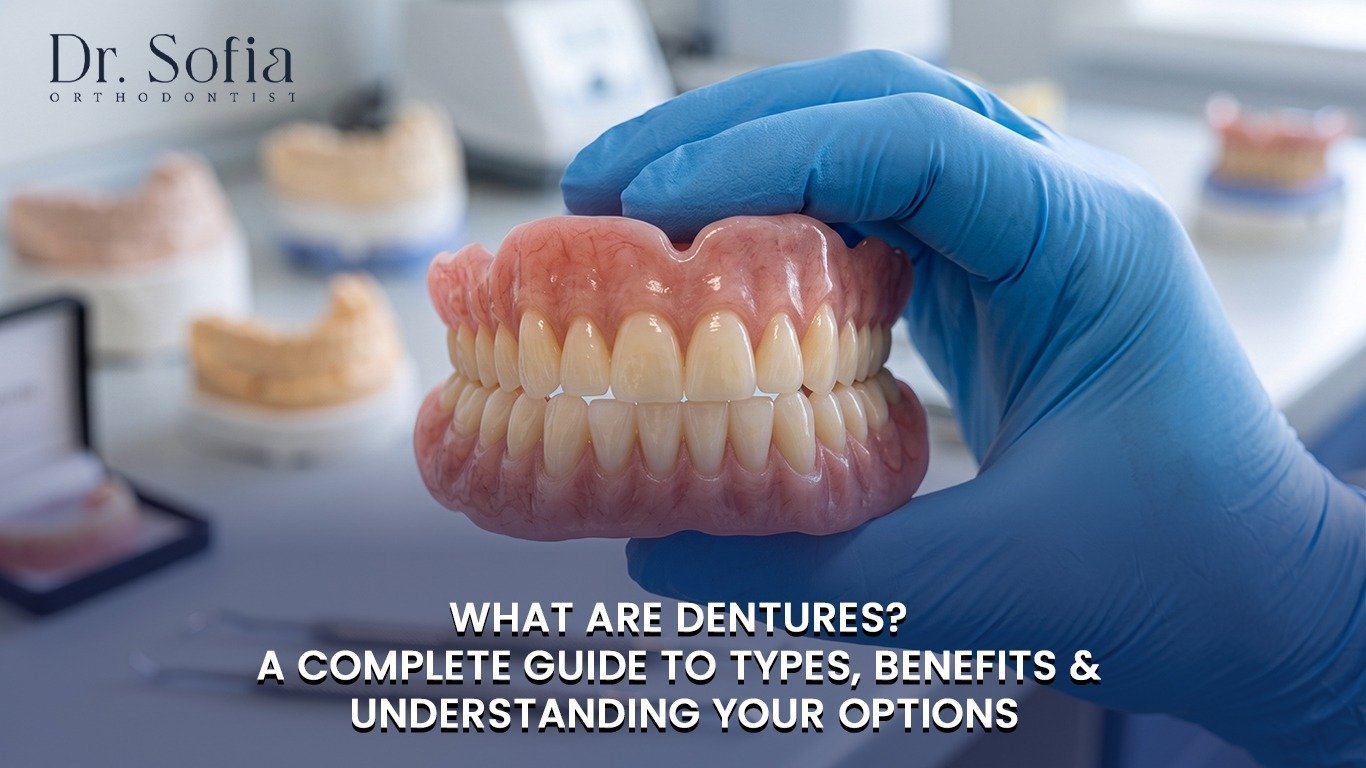
They’re removable replacements for missing teeth and the surrounding tissues. Think of them as custom-made false teeth designed to fit your mouth specifically. They’re made from materials like acrylic resin, porcelain, or a combination of metal and plastic, then shaped to match your gum line and tooth appearance.
The main job of dentures is simple: restore your ability to eat, speak clearly, and smile confidently. They also help support your facial muscles and prevent the sunken appearance that often comes with multiple missing teeth.
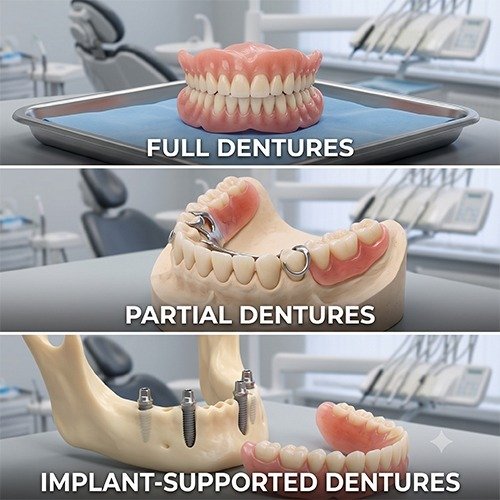
These replace all your upper teeth, all your lower teeth, or both. Complete dentures rest directly on your gums and are custom-fitted to your mouth. They’re held in place through suction and the shape of your gums.
Why people choose them:
You get a partial denture when you still have some natural teeth. These attach to your remaining teeth using metal clasps or precision attachments. A partial denture includes replacement teeth, a gum-coloured base, and a metal framework that holds everything in place.
Key advantages:
What are dentures that don’t move around in your mouth? These ones. An implant-supported denture connects to dental implants that are surgically placed in your jawbone. Instead of resting on your gums, they anchor to these implants for stability.
Why this matters to you:
These are fitted right after your teeth are extracted, so you leave the dentist’s office with teeth. They’re temporary solutions while your gums heal and reshape, then you’ll get permanent ones fitted later.
Made after your gums have fully healed (usually 8-12 weeks after extraction), these are the permanent solution most people end up with.
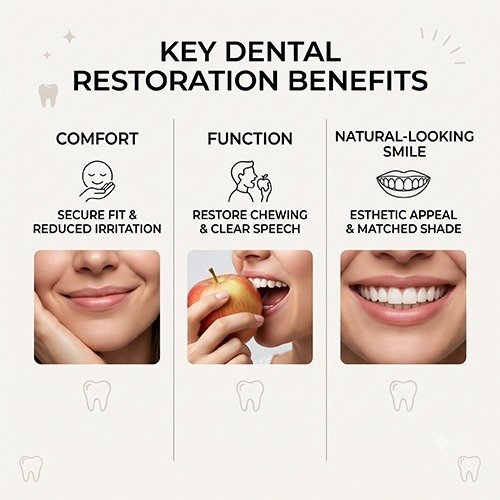
Beyond just filling gaps, dentures actually change your daily life:
For eating and speaking:
For appearance:
For confidence:
For oral health:
The materials matter for comfort, durability, and how they look:
What are dentures in week one vs. week eight? Different experiences. Your mouth needs time to adjust. Your tongue, cheeks, and facial muscles have adapted to missing teeth for months or years. When you add dentures, everything changes.
What to expect:
You’ll need several adjustment appointments so your dentist can file areas that rub, refine the fit, and make sure they’re comfortable.
This is non-negotiable for longevity:
At Dr Sofia Hawelia’s practice, we understand that getting dentures is a significant decision. Whether you’ve lost teeth to decay, injury, or age, you deserve a solution that works with your lifestyle and looks natural.
We take time to understand your specific situation:
Our approach combines clinical precision with practical advice. We don’t just make dentures — we restore function and confidence.
Schedule your consultation with Dr Sofia Hawelia. Come discuss your options without pressure. We’ll answer your questions honestly and help you understand exactly what to expect.
Most dentures last 5-8 years with proper care, though some last longer. They wear down over time as you bite and chew.
No. Most people need 4-8 weeks before they feel truly comfortable, but adjustment gets easier each day.
You shouldn't. Sleeping in them prevents your gums from breathing and increases infection risk. Take them out every night.
Schedule an adjustment appointment. Minor tweaks take 15-30 minutes. This is completely normal.
Not always. Well-fitted dentures stay in place naturally. Some people use adhesive for extra security, especially during meals.