Authored by: Dr.Sofia Hawelia (orthodontist)
If your dentist just told you that you need scaling and root planing, you’re probably wondering what that actually means. The name sounds intense, and I know patients often get nervous when they hear it for the first time. But let me be straight with you: this isn’t something to fear. It’s one of the most effective ways we have to stop gum disease before it destroys your teeth.
I’ve been doing this for over fifteen years, and I’ve seen what happens when patients ignore gum disease. I’ve also seen what happens when they get the treatment they need. The difference is dramatic.
Let’s break this down because it’s two separate things working together.
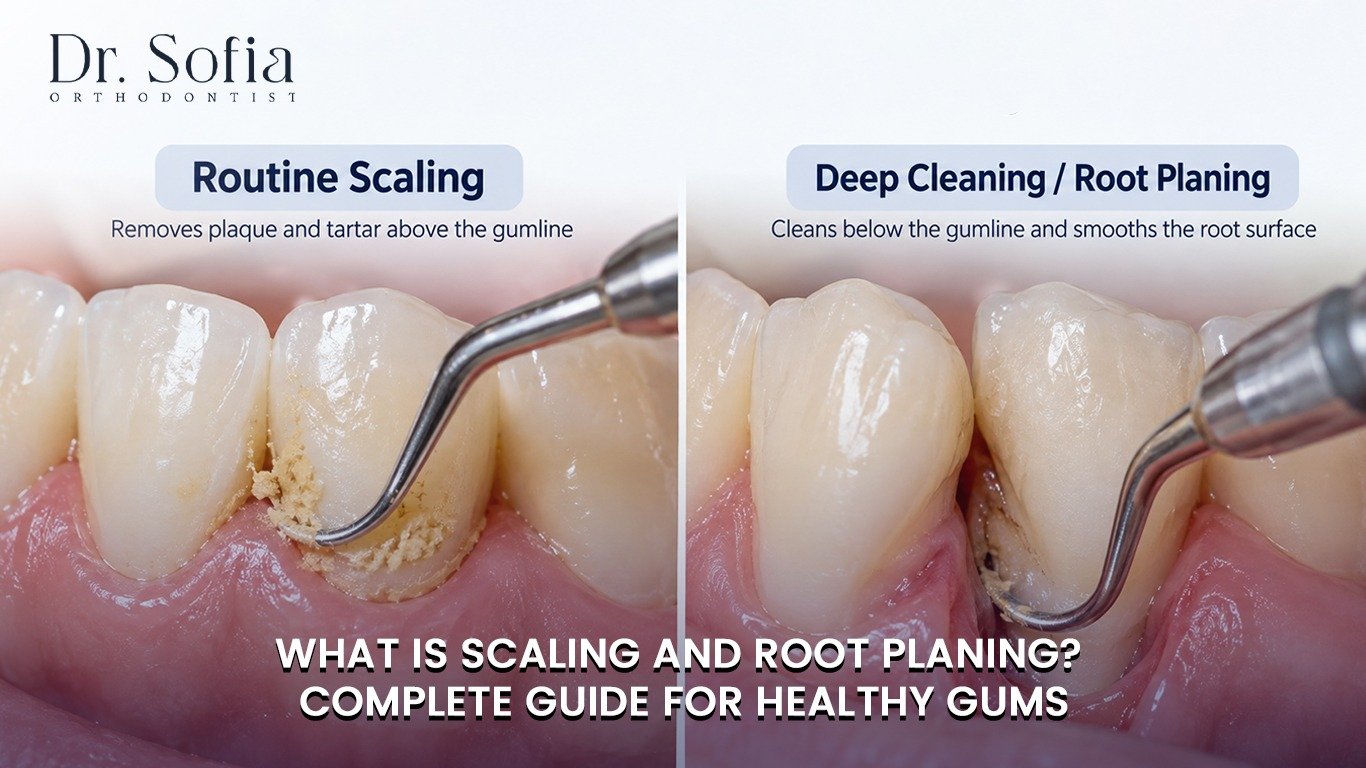
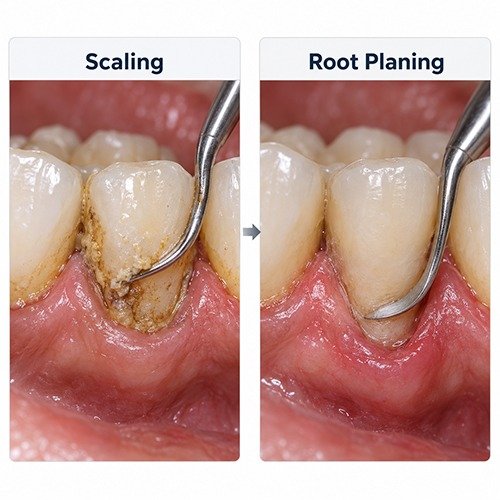
Scaling means we’re removing tartar (hardened plaque) from your teeth and below your gum line. Your toothbrush can’t reach below the gum line. Neither can any toothpaste. Once plaque calcifies into tartar, only professional tools can remove it. We use an ultrasonic scaler with a vibrating tip to break apart that buildup, then rinse it away.
Root planing means we’re smoothing out the surface of your tooth roots. When gum disease progresses, it creates pockets around your teeth. Bacteria love those rough pockets—they hide in there and keep causing damage. By smoothing the root surface, we eliminate those hiding spots and help your gum tissue reattach to the tooth.
When someone asks, “What is scaling and root planing?” the simplest answer is, “It’s a deep cleaning below the gum line to treat gum disease.” Some dentists call it a “deep clean” or “non-surgical periodontal therapy”. Same thing, different name.
Gum disease doesn’t show up overnight. It progresses in stages, and timing matters.
Early stage (gingivitis): Your gums are red, swollen, and maybe bleeding when you floss. Regular brushing and flossing can usually reverse this at home.
Moderate to advanced (periodontitis): The bacteria have started damaging the tissues and bone that hold your tooth in place. You’ve got pockets around your teeth where plaque and tartar hide deep below the gum line. A regular cleaning can’t reach these areas. That’s when “What is scaling and root planing?” becomes the right treatment.
During your exam, I measure those pockets with a small probe. If they’re deeper than 3-4mm, we need to go deeper than a regular cleaning. That’s when I recommend this procedure.
Without treatment, gum disease gets worse. Pockets get deeper. More bone deteriorates. Eventually, you lose teeth. I’ve had patients come in years later saying they wish they’d done this when I first suggested it. Prevention is always cheaper than the alternatives.
Here’s what you can expect from start to finish.
Before we start:
During the cleaning:
What it feels and sounds like:
Most patients tell me afterward, “That really wasn’t as bad as I expected.”
Your gums will be tender for a few days. Here’s what actually works:
You can get back to normal eating and activities after a day or two. This isn’t major surgery—your gums just need gentleness while they heal.
Here’s what people need to understand: this procedure isn’t a permanent cure. It’s a reset.
Around 4-6 weeks after treatment, I want to see you again to check how your gums are healing. Those pockets should be shallower. Bleeding should stop. Most patients show real improvement at this point.
But here’s the reality: long-term success depends entirely on what you do at home. Brush twice a day. Floss every single day—not sometimes, every day. Come in for follow-up cleanings every 3-4 months instead of the standard 6 months. If you smoke, quit. Smoking makes gum disease worse and healing slower.
I’ve seen patients get this procedure and then never come back for their follow-ups. Those patients usually need the procedure again or end up dealing with worse problems. Don’t be that person.
No. You're numbed before we start. You'll feel pressure and vibration but no pain. If you feel pain during the appointment, tell me immediately and I'll give you more anaesthetic.
Possibly slightly. We're removing tartar buildup, which is usually dark or yellow. Removing it reveals the natural tooth underneath, so teeth might look a bit brighter. But this isn't a whitening procedure.
It depends on your individual case. Some patients need it once and never again if they maintain good oral hygiene. Others need maintenance scaling every 3-4 months if their gum disease is more aggressive or if they struggle with home care. I'll tell you what you need at your follow-up visit.
Almost never. We use local anaesthesia to numb the specific area we're treating. General anaesthesia carries unnecessary risks for a routine procedure. Local numbing is safe and effective, and you stay awake the whole time.
No. Regular cleanings only remove buildup above the gum line. Once you have gum pockets with bacteria and tartar below the line, a regular cleaning can't reach that. Scaling and root planing is the only way to properly clean those deep areas.